 goodword
Why cheap Vietnamese noodle bowls and bánh mì are catching on in Vancouver — and how to price them
Vancouver diners want lunch that feels full, travels well, and still lands under $20. These Vietnamese staples do that better than most.
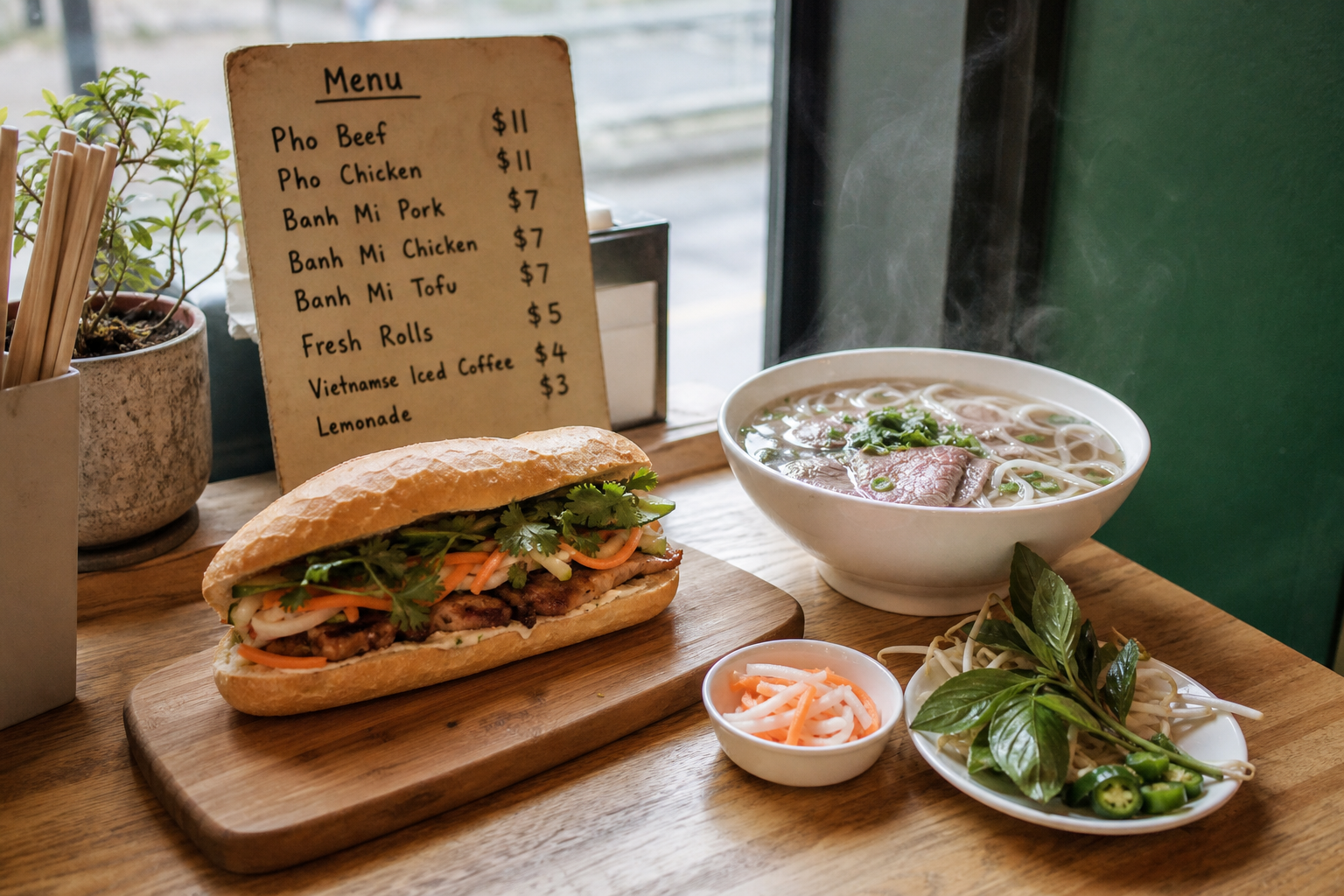
The short version
- Bánh mì still sits around the $8.50-$9.00 mark at a Vancouver benchmark specialist, while pho and noodle bowls often run in the mid-to-high teens.
- The trend is being driven by value-seeking diners, portable lunch demand, and social posts that frame Vietnamese spots as cheap, filling, and worth it.
- Owners can protect margin by pricing from food cost first, then checking whether the bowl actually sells at the target price.
Cheap Vietnamese lunch is having a real moment in Vancouver
There is a clear value story building around Vietnamese noodle bowls and bánh mì in Vancouver.
Not the fancy version. Not the “small plates” version.
The version people order when they want something filling, fast, and still affordable.
That matters in this market. Vancouver diners are watching every lunch spend. A $40 order at a third-party app can mean $12 gone before the food even leaves your door. A regular you never meet is not really your regular.
Vietnamese bowls and sandwiches cut through that.
They are easy to understand. They travel well. They feel like a full meal.
What the trend looks like on Vancouver menus
The current menu picture is straightforward:
- The Original Banh Mi Saigon lists sandwiches around C$8.50–C$9.00.
- Pho Hong on Fraser lists pho and noodle soups mostly around C$15.95–C$18.50.
- Vermicelli and rice bowls there start around C$17.25.
That is the range operators are working with now. It is not a “cheap food” category in the old sense. It is a high-value lunch category.
| Item type | Example menu signal in Vancouver | What customers read it as |
|---|---|---|
| Classic bánh mì | C$8.50–C$9.00 | Affordable lunch |
| Pho / noodle soup | C$15.95–C$18.50 | Full meal |
| Vermicelli / rice bowl | From C$17.25 | Bigger, more complete lunch |
Why it is surging
1) People want more value for the dollar
Restaurants Canada says 75% of Canadians are eating out less often because of cost of living, and diners are looking for more value for their dollar.
That is the whole story here.
When customers are cautious, they gravitate toward food that feels like a lot of meal for the money. Vietnamese noodle bowls and bánh mì do that well.
2) The format fits a lunch market
These dishes are built for speed.
- Bread, noodles, herbs, pickles, broth.
- Quick assembly.
- Easy takeaway.
- Easy to repeat.
That makes them a strong fit for busy neighbourhood lunch trade.
3) Vancouver social content is already framing them as a deal
In the recent TikTok sample, the repeated language around Vancouver food is not just “Vietnamese.” It is cheap, massive portions, solid prices, and worth your money.
That matters. Social content is not a sales report. But it is a strong read on what people are excited to show other people right now.
4) Protein pressure makes flexible menus more useful
Canada’s Food Price Report 2026 points to food inflation pressure and notes stronger demand for chicken as beef gets pricier.
Vietnamese menus can flex.
That is a real advantage.
You can keep the same bowl format and move between:
- pork
- chicken
- tofu
- beef
That lets you defend your price point without throwing away the whole concept.
A simple origin story and recipe
Where bánh mì comes from
Bánh mì is the Vietnamese sandwich built around a French baguette, then made local with Vietnamese fillings and condiments. The modern sandwich form is commonly tied to Saigon in the mid-20th century.
Simple grilled pork bánh mì
Ingredients
- 1 Vietnamese-style baguette
- 120–150 g grilled lemongrass pork
- mayo
- pâté, optional
- pickled daikon and carrot
- cucumber
- cilantro
- jalapeño
- a little soy or fish seasoning
Method
- Split and lightly toast the baguette.
- Spread mayo. Add pâté if you use it.
- Add grilled pork.
- Top with pickled daikon and carrot, cucumber, cilantro, and jalapeño.
- Season lightly and serve.
That build matches the standard structure used by current Vancouver bánh mì specialists: baguette, mayo, pickled vegetables, cilantro, jalapeño, and a filling like lemongrass pork or cold cuts.
A margin-safe pricing framework
A good rule is to price from food cost first, then check whether the market supports it.
For fast-casual bowls and sandwiches, many owners aim for food cost around 28% to 32% on the plate.
Here is a simple working model:
| Item | Food cost target | Example menu price | Food cost % |
|---|---|---|---|
| Bánh mì | $2.75 | $9.95 | 27.6% |
| Small pho bowl | $5.25 | $16.95 | 31.0% |
| Larger noodle bowl | $6.00 | $18.95 | 31.7% |
| Premium protein bowl | $6.75 | $21.95 | 30.7% |
These are not universal numbers. They are a planning frame.
What matters is whether your real prep cost can hold that target after:
- protein shrink
- broth yield
- garnish waste
- packaging
- delivery commission, if you use it
A bánh mì that costs you $2.75 in food can work at $9.95 if you keep labour tight and waste low.
A noodle bowl that costs $6.75 in food may need to sit closer to $21.95 if the protein is premium.
What to watch before you price too low
- Pork belly and beef can blow up your food cost faster than chicken or tofu.
- Broth is only cheap if yield is controlled.
- Herbs and pickles feel minor, but waste adds up.
- Delivery fees can erase the margin on a $16 bowl very quickly.
The owner test: is it really profitable?
A trending item is only useful if it makes money.
Before you add more Vietnamese bowls or bánh mì to the board, check:
- actual food cost per portion
- average ticket with sides and drinks
- waste from prep
- how often the item gets reordered
- whether delivery orders are carrying enough margin
That is where a clean POS and inventory setup matters. If you cannot see the cost of the pork, noodles, herbs, and packaging against the sales coming in, you are guessing.
And guessing gets expensive.
Good Vietnamese value items should look full on the plate and still leave room in the margin.
That is exactly the kind of number goodword helps owners track, without middlemen taking a cut of every order.
Questions owners ask
What is the best food cost for a bánh mì in Vancouver?
A common target is around 28% to 32% food cost, but the right number depends on your labour, packaging, and how much margin you need after delivery fees.
Why are Vietnamese noodle bowls working right now?
They feel like a full meal, they travel well, and they match what cautious diners want: strong value for the price.
How do I know if a trending menu item is actually profitable?
Track the ingredient cost, portion yield, packaging, and sales in one place, then compare that against the menu price and channel mix.
Sources
- The Original Banh Mi Saigon menu
- Pho Hong menu
- Canadians are snacking more, drinking less and looking for more value for their shrinking dollar: 2025 Foodservice Facts report - Restaurants Canada
- Foodservice in Canada - agriculture.canada.ca
- Canada's Food Price Report 2026 - Agri-Food Analytics Lab - Dalhousie University
- The story of Vietnamese pho | Vietnam Tourism
- menu — The Original Banh Mi Saigon Vancouver
- Order S.A.M.E Vietnamese Eatery - Vancouver, BC Menu Delivery [Menu & Prices] | Vancouver - DoorDash
- Canadians are snacking more, drinking less and looking for more value for their shrinking dollar: 2025 Foodservice Facts report - Restaurants Canada
- Foodservice in Canada - agriculture.canada.ca
- Canada's Food Price Report 2026 - Agri‑Food Analytics Lab - Dalhousie University
- Bánh mì
- The story of Vietnamese pho | Vietnam Tourism
- The Daily — Consumer Price Index, January 2026
- Food Price Data Hub
- Welcome to Wholesale Club
Check whether your Vietnamese bowls are actually making money
See item-level sales, ingredient usage, and margin in one place. No commission. No guessing.
Start setup →